Missing teeth can affect your everyday life in ways you may not expect. Eating certain foods becomes difficult, speaking may feel uncomfortable, and you might even find yourself hiding your smile in photos or conversations. Fortunately, modern dentistry offers several ways to replace missing teeth and restore your confidence.
Two common options are traditional dentures and dental implants. Both can improve the appearance of your smile, but they work differently and offer different benefits. Some patients prefer the convenience of removable dentures, while others want a more stable, long-term solution.
If you are researching Dental Implants Kingsburg, understanding how these treatments compare can help you make a better decision. Let’s look at their differences, benefits, costs, and the factors that determine which option may suit your needs.
What Are Dental Implants?
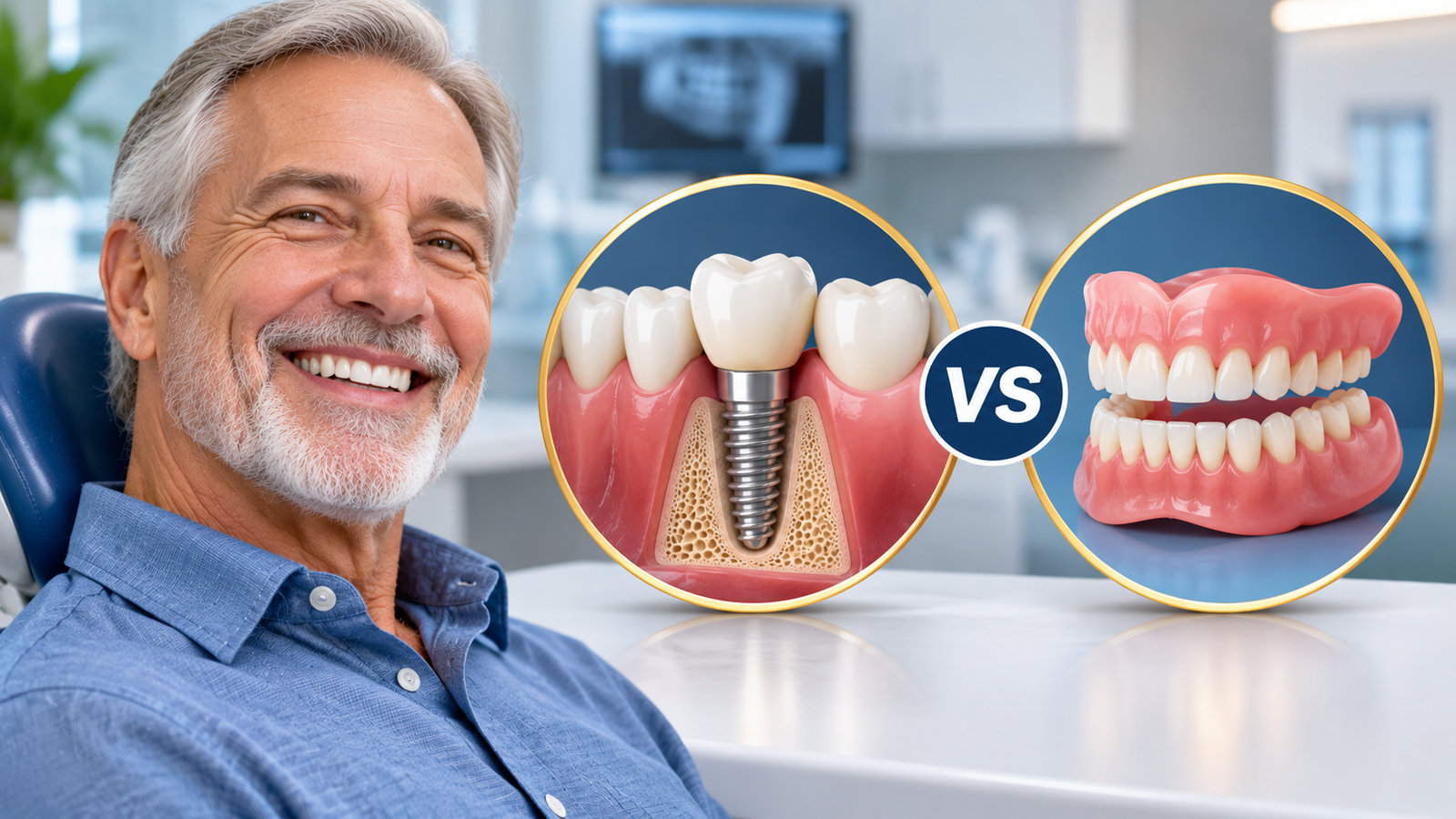
Dental implants are artificial tooth roots, usually made from titanium, that are surgically placed into the jawbone. Once the surrounding bone heals and bonds with the implant, it creates a stable foundation for replacement teeth.
A complete implant restoration typically includes three components:
- Implant Post: A titanium fixture that replaces the natural tooth root.
- Abutment: A connector that attaches the replacement tooth to the implant.
- Dental Crown or Prosthesis: The visible replacement tooth or set of teeth.
One major advantage of dental implants is that they help stimulate the jawbone, reducing the bone deterioration that can happen after tooth loss.
Depending on how many teeth are missing, implants can support individual crowns, bridges, or full-arch restorations.
What Are Traditional Dentures?
Dentures are removable dental appliances designed to replace several missing teeth or an entire set of teeth. They are usually made with artificial teeth attached to a gum-colored acrylic base.
There are two main types:
- Full Dentures: Replace all the teeth in the upper or lower jaw.
- Partial Dentures: Replace multiple missing teeth while fitting around the remaining natural teeth.
Traditional dentures rest on the gums and rely on their shape and fit for support. Some patients also use denture adhesives to improve stability.
Modern dentures are designed to look natural and can improve chewing, speaking, and smile appearance. However, their fit may change over time as the jawbone and gum tissues naturally change.
Dental Implants vs. Dentures: 6 Important Differences
Both treatments replace missing teeth, but the experience of wearing them can be quite different.
1. Stability and Comfort
One of the biggest differences between the two options is how they stay in place.
Traditional dentures sit on top of the gums. Although properly fitted dentures can feel comfortable, they may sometimes move while eating, laughing, or speaking. Loose dentures can also create sore spots and gum irritation.
Dental implants are secured within the jawbone, providing a much more stable foundation. Since they do not depend on suction or adhesive for support, they are less likely to move during everyday activities.
For patients who are frustrated with slipping dentures, implant-supported restorations may offer an alternative.
2. Appearance and Natural Feel
Both options can restore the appearance of missing teeth.
Modern dentures are customized to match facial features, gum color, and natural tooth appearance. However, some people find that removable dentures feel different from their original teeth.
Dental implants are designed to function more like natural teeth. The replacement crowns or bridges are customized to complement the surrounding teeth, creating a natural-looking smile.
Your dentist can help determine which restoration will provide the appearance and function you want.
3. Chewing and Eating Ability
Missing teeth can make it difficult to enjoy foods such as apples, nuts, and tougher meats.
Traditional dentures improve chewing ability, but they may not provide the same biting force as natural teeth. Some patients need to avoid particularly hard or sticky foods to prevent their dentures from shifting.
Dental implants provide support through the jawbone, allowing patients to chew with greater stability. Once treatment is complete and your dentist approves, you can generally enjoy a wider variety of foods.
4. Jawbone Health
Your natural tooth roots stimulate the jawbone whenever you chew. When teeth are lost, that stimulation disappears, and the underlying bone may gradually shrink.
Traditional dentures replace the visible teeth but do not replace their roots. As a result, they cannot prevent the bone changes associated with tooth loss.
Dental implants replace the function of tooth roots and stimulate the surrounding bone through normal biting forces. This helps preserve jawbone structure and may reduce changes in facial appearance associated with bone loss.
5. Daily Maintenance
Traditional dentures require a separate cleaning routine. They generally need to be removed daily, cleaned thoroughly, and stored appropriately when not being worn.
Dental implants can be maintained with regular brushing, flossing, and professional dental cleanings. Implant-supported removable dentures still require removal and cleaning according to your dentist’s instructions.
Regardless of your choice, maintaining healthy gums is essential for protecting your remaining teeth and restorations.
6. Long-Term Cost
Cost is another important consideration when comparing these treatments.
Traditional dentures usually have a lower initial cost than dental implant treatment. However, they may require adjustments, relining, repairs, or replacement as your mouth changes.
Dental implants generally involve a higher upfront investment because they require surgery, implant components, and custom restorations. However, they can provide long-term value when properly maintained.
The actual cost depends on the number of missing teeth, bone condition, additional procedures, and the type of restoration selected.
What About Implant-Supported Dentures?
There is another option worth considering if you want the benefits of both treatments.
Implant-supported dentures combine removable or fixed denture restorations with dental implants. Instead of resting entirely on the gums, the denture attaches to implants placed in the jawbone.
This provides better stability than conventional removable dentures.
At Kingsburg Family Dentistry, patients can explore implant-supported dentures as an alternative to traditional dentures and full-mouth implant restorations.
This treatment may be suitable for people who have lost most or all of their teeth but want improved stability without necessarily choosing a completely fixed restoration.
Which Option Is Better for You?
There is no single answer that works for everyone. Your ideal treatment depends on your oral health, budget, jawbone condition, and personal preferences.
Traditional dentures may be suitable if:
- You want a more affordable initial treatment.
- You prefer a removable tooth replacement.
- You are not currently a candidate for implant surgery.
- You need to replace several or all missing teeth.
Dental implants may be suitable if:
- You want a stable, fixed tooth replacement.
- You have sufficient jawbone or can undergo bone grafting.
- You want to reduce further jawbone deterioration.
- You are comfortable with a surgical procedure and healing period.
Patients missing most or all of their teeth can also explore All-on-X dental implants, which use strategically placed implants to support a full arch of replacement teeth.
A dental examination is necessary to determine which treatment is appropriate for your situation.
Restore Your Smile with Dental Implants in Kingsburg, CA
Choosing between dentures and dental implants is an important decision that can affect your comfort, appearance, and oral health for years.
At Kingsburg Family Dentistry and Implant Center, patients can explore different tooth replacement options, including traditional dentures, implant-supported dentures, and full-mouth dental implants. The dental team evaluates your needs and helps you understand the available treatments.
If you are considering Dental Implants Kingsburg, schedule a consultation to discuss your options and find a solution that fits your oral health needs and goals.
Ready to take the next step?
Visit Kingsburg Family Dentistry at 1064 Lewis St, Kingsburg, CA 93631, or call 559-897-2600 to schedule an appointment. For more visit us here.
