

Losing a tooth can affect much more than the appearance of your smile. It can make chewing uncomfortable, change the way you speak, and cause nearby teeth to shift over time. For people looking for a reliable way to replace missing teeth, dental implants offer a long-term solution that closely resembles natural teeth.
But how do they actually work? What happens during the procedure, and how long does it take before you can enjoy your restored smile?
Understanding the process can make the decision easier. If you are considering dental implants, knowing what happens at every stage will help you feel more prepared for treatment. At Kingsburg Family Dentistry and Implant Center, patients receive personalized care and treatment recommendations based on their oral health needs.
What Are Dental Implants and How Do They Work?
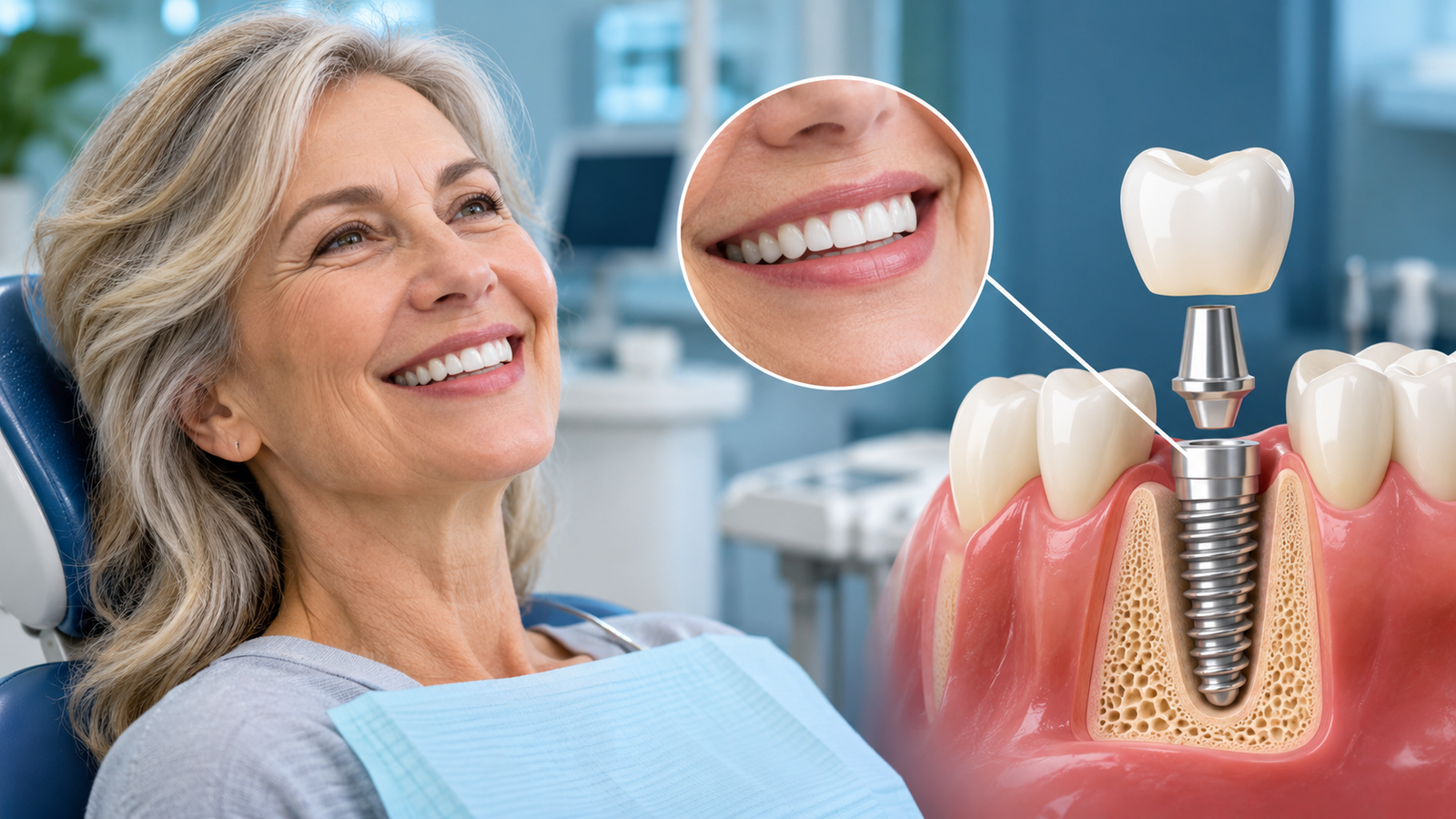
Dental implants are artificial tooth roots designed to replace missing natural teeth. They are usually made from titanium, a biocompatible material that can bond with the surrounding jawbone.
Unlike traditional dentures that rest on the gums, dental implants are placed directly into the jawbone. Over time, the bone grows around the implant and holds it securely in place. This natural bonding process is called osseointegration.
A complete dental implant restoration generally has three main components:
- Implant Post: A small titanium screw placed into the jawbone to act as an artificial tooth root.
- Abutment: A connector that attaches the replacement tooth to the implant post.
- Dental Crown: The visible portion of the restoration, custom-made to resemble a natural tooth.
Together, these components create a stable replacement that helps restore chewing ability, speech, and the appearance of your smile.
How Does the Dental Implant Process Work?
Getting dental implants involves several stages. The exact treatment plan depends on how many teeth are missing, the condition of your gums, and the amount of available jawbone.
Here is what patients can generally expect during the process.
1. Initial Consultation and Dental Examination
The first step is scheduling a consultation with your dentist. During this appointment, the dental team evaluates your oral health and discusses your concerns, expectations, and tooth replacement goals.
Your dentist may use digital X-rays and 3D imaging to examine your jawbone, surrounding teeth, nerves, and other important structures.
This evaluation helps determine whether you have enough healthy bone to support an implant. It also allows your dentist to identify potential concerns, such as gum disease, infections, or damaged teeth that may need attention before treatment.
Patients with significant tooth damage or multiple missing teeth may also benefit from discussing full mouth rehabilitation as part of their treatment planning.
2. Preparing the Mouth for Implant Placement
Before placing an implant, your dentist needs to make sure your mouth is healthy enough for the procedure.
If you have an infected tooth, advanced gum disease, or insufficient jawbone density, additional treatment may be necessary.
For example, a bone graft may be recommended when the jawbone does not have enough volume to support an implant properly. This procedure adds bone material to the treatment area and gives the jaw time to heal.
If a damaged tooth needs to be removed, your dentist will determine whether implant placement can happen immediately or whether it is better to wait until the extraction site heals.
Proper preparation helps create a healthier foundation for successful treatment.
3. Surgical Placement of the Implant Post
Once your mouth is ready, the next stage is implant surgery.
During this procedure, the dentist places the titanium implant post into the planned position within your jawbone. Local anesthesia is used to numb the treatment area, and sedation may be available depending on your needs and the complexity of the procedure.
The dentist carefully positions the implant so it can provide stable support for the replacement tooth.
After placement, the gum tissue is allowed to heal around the implant site. Some patients experience mild swelling, tenderness, or bruising afterward. These effects generally improve during the recovery period.
You can learn more about the surgical side of treatment on the oral surgery services page at Kingsburg Family Dentistry.
4. Healing and Osseointegration
This is one of the most important stages of getting dental implants.
After surgery, your jawbone gradually grows around the titanium implant post. This process, known as osseointegration, creates a strong connection between the implant and the surrounding bone.
Depending on your individual healing response and treatment requirements, this stage may take approximately three to six months.
During this time, your dentist will monitor the healing process and provide instructions to protect the implant site.
You may need to:
- Eat softer foods during the initial recovery period.
- Brush and floss carefully around the treatment area.
- Avoid smoking, which can interfere with healing.
- Follow your dentist’s instructions for medications and oral hygiene.
- Attend recommended follow-up appointments.
Some patients may receive temporary replacement teeth while the implant heals, depending on their treatment plan.
5. Attaching the Abutment and Final Crown
Once the implant has successfully bonded with the jawbone, the next step is attaching the abutment.
The abutment connects the implant post to the final restoration. After the surrounding tissue has healed as needed, your dentist takes impressions or digital scans to create a custom replacement tooth.
The final crown is designed to match the size, shape, and color of your surrounding teeth.
When the restoration is ready, it is secured to the implant. Your dentist checks the fit, bite, and appearance to make sure everything feels comfortable.
At this point, your dental implant treatment is complete, and you can gradually return to your regular eating habits while following your dentist’s recommendations.
What Types of Dental Implants Are Available?
Not everyone needs the same type of tooth replacement. The right option depends on the number of missing teeth and your overall oral health.
Here are some common treatment options:
Single-Tooth Implants
If you are missing one tooth, a single implant can support an individual dental crown. It replaces the missing tooth without requiring neighboring healthy teeth to be reshaped for support.
Implant-Supported Bridges
When several neighboring teeth are missing, an implant-supported bridge may be recommended. Instead of relying on natural teeth for support, the bridge is secured using strategically placed implants.
Implant-Supported Dentures
Patients missing several or all teeth may benefit from implant-supported dentures. These restorations attach to dental implants, providing greater stability than conventional removable dentures.
Learn more about full and partial dentures and the available tooth replacement options.
All-on-X Dental Implants
For patients missing most or all of their teeth, All-on-X treatment uses strategically positioned implants to support a full arch of replacement teeth.
The number of implants depends on the patient’s anatomy and treatment requirements. This approach can provide a fixed alternative to traditional removable dentures.
Explore the All-on-X dental implant treatment available at Kingsburg Family Dentistry.
How Long Does the Complete Dental Implant Process Take?
The timeline varies from one patient to another. Some people may complete treatment within a few months, while others need additional healing time or preparatory procedures.
Here is a general overview:
| Treatment Stage | Approximate Timeline |
|---|---|
| Initial consultation | 1 appointment |
| Preparatory treatment | Depends on individual needs |
| Implant placement | Usually one surgical appointment |
| Bone integration | Approximately 3–6 months |
| Final crown placement | After successful healing |
These are general estimates, not guaranteed treatment times. Your dentist will provide a more accurate timeline after examining your teeth and jawbone.
Who Is a Good Candidate for Dental Implants?
Many adults with missing teeth can be considered for implant treatment. However, certain factors influence whether the procedure is suitable.
A good candidate generally has:
- Healthy gums without uncontrolled periodontal disease.
- Adequate jawbone density to support the implant.
- Good overall health and healing ability.
- A commitment to maintaining proper oral hygiene.
- Realistic expectations about the treatment process.
Patients with diabetes, a history of gum disease, or other medical conditions may still qualify, but these factors should be evaluated before treatment.
Age alone does not determine eligibility. A proper dental examination is the best way to understand your options.
How Can You Make Your Dental Implants Last Longer?
Once your replacement teeth are in place, taking care of them is essential. Although the implant itself cannot develop cavities, the surrounding gums and bone still need protection.
Follow these simple habits:
- Brush twice daily using a soft-bristled toothbrush.
- Clean between your teeth and around the implant every day.
- Schedule regular dental examinations and professional cleanings.
- Avoid chewing extremely hard objects that could damage the restoration.
- Do not smoke or use tobacco products.
- Contact your dentist if you notice discomfort, swelling, or movement around the implant.
With proper placement, good oral hygiene, and regular professional care, dental implants can provide long-lasting tooth replacement.
Restore Your Smile with Dental Implants at Kingsburg Family Dentistry
Missing teeth do not have to limit the way you eat, speak, or smile. Understanding how dental implants work can help you make a more informed decision about restoring your oral health.
At Kingsburg Family Dentistry and Implant Center, patients receive personalized treatment planning, modern dental technology, and care focused on long-term results. Whether you need to replace a single missing tooth or are exploring a full-arch restoration, the dental team can help you understand the available options.
If you are considering dental implants in Kingsburg, CA, schedule a consultation to discuss your needs and find out whether implant treatment is right for you.
Take the first step toward restoring your smile.
Visit Kingsburg Family Dentistry and Implant Center or call 559-897-2600 to schedule an appointment.
